The Methodology
Singing is the endpoint of a physiological preparation. Not the starting point.
The voice is almost the last thing to arrive.
The voice you're reaching for is already in you. The body knows what to do. Breath & Voice is the work of letting it out.
The Three Pillars
I.
Alignment
The body before the voice.
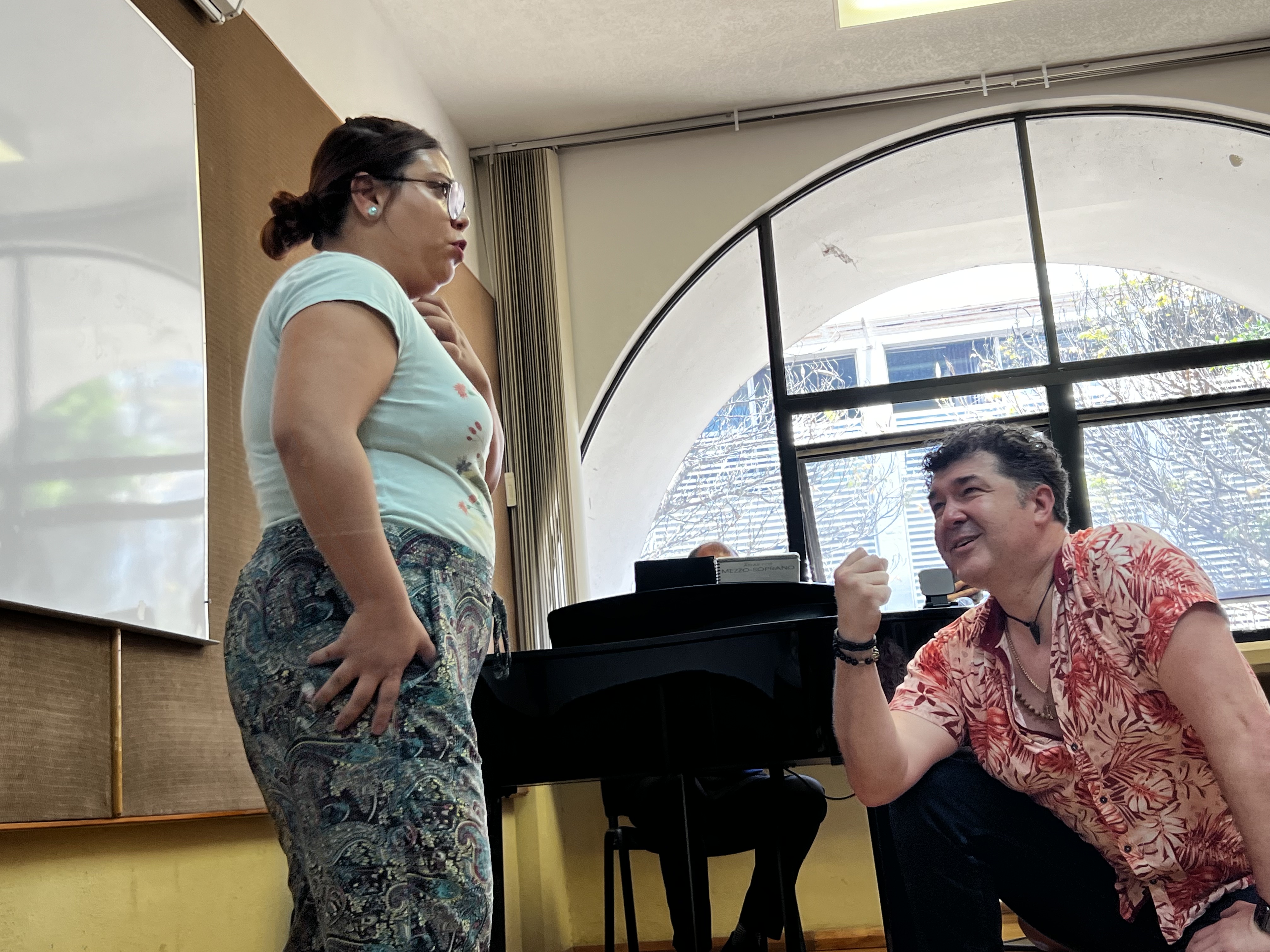
Alignment is the relationship between the skeleton, the breath, and gravity — a living, dynamic balance that lets the whole body work freely. When alignment is right, the breath moves freely. When the breath moves freely, the voice is free. Alignment is where every session begins — because it's where freedom begins.
II.
Breath
Where everything begins.
Breath is the primary tool of the methodology — the real, physical thing, because the breath is where the nervous system is most directly accessible. Breath first: a singer whose breath is free is a singer whose body is already moving toward the Singer State. This is why the company is called Breath & Voice, in that order.
III.
Resonance
Where the voice finds its full self.
Resonance is what the voice does when alignment and breath work as one system. The singer allows it. The work of the methodology is to set it free. When it arrives, the singer feels it before the audience hears it. That felt sense — resonance experienced from within — is the signal that the Singer State is near.
The Destination
The Singer State.
Free, full, instinctive expression. The Singer State is not a mood or a mindset. It is a physiological condition — a specific relationship between the nervous system, the breath, the body, and the voice that allows the singer to give everything they have without interference.
It does not arrive through the pursuit of perfection. It arrives when that pursuit is set down.
The Breath & Voice methodology creates the conditions for it to become reliable — not a lucky accident on a good night, but a state the singer knows how to find.
The Singer State is not taught. It is uncovered.
— Luis Chapa
How a Session Works
Every session follows a sequence. The sequence is the methodology.
-
1
Arrival diagnostic
How have you been — is not social conversation. It is the beginning of the session.
-
2
Co-regulation
Luis brings himself to a regulated state. The student begins moving toward it.
-
3
Language and approach
Chosen automatically to match the student. Not a method imposed — a response to what is present.
-
4
Breathing techniques
The primary intervention. Breath before anything else.
-
5
Alignment and breath working together
When these two function as a unified system, the whole mechanism activates.
-
6
Nervous system self-regulates
Luis does not impose regulation. He creates conditions precise enough that the nervous system does it itself.
-
7
Performance state
Parasympathetic foundation — safe enough. Sympathetic activation — daring enough.
-
8
Repertoire work
The voice now has somewhere to go. The work enters the music.
-
9
The felt sense
The singer begins to feel what free expression feels like from the inside.
-
10
Integration
The session ends. The body remembers.
Who It Is For
For every singer who's given themselves to it. At any level.
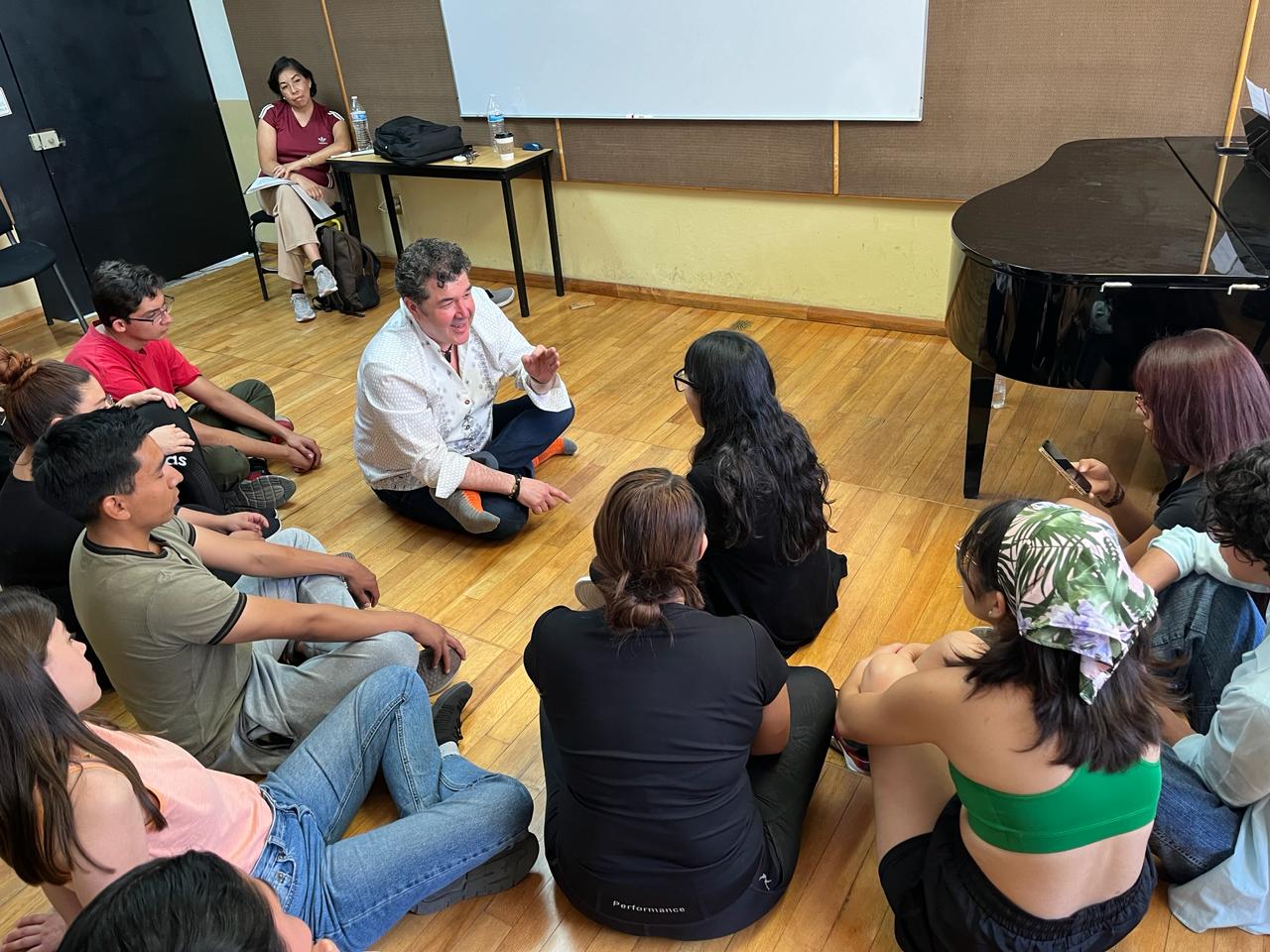
Breath & Voice is for singers who are committed to it — conservatoire students, post-conservatoire graduates, self-formed singers, singers with learning differences, popular-music singers, anyone for whom singing is a calling.
Whatever your genre, wherever you trained, whatever you've been told about your voice — what matters is that commitment.
It's what you bring to the door. Once you're inside, the methodology meets you with trust.
Grounded in Research
The methodology is supported by evidence.
Breath Physiology
The mechanics of how breath moves through the body and activates the nervous system.
Somatic Practice
How the body holds and releases tension — and why the body must lead.
Performance Neuroscience
What the nervous system does under performance conditions and how to work with it, not against it.
Vocal Pedagogy
Thirty years of teaching at the highest levels, synthesised into a repeatable methodology.
Work directly with the methodology.
Private sessions with Luis Chapa. London and online.
The same work is available to speakers and professionals who speak under pressure →