Every singer who walks into my studio ready to sing arrives carrying something real. The voice is there. The years of training are there — often more of them than they give themselves credit for. And still, for so many of the people I teach, that voice doesn't come out the way it should. Something stands between what they've built and what actually leaves their body when they open their mouth to sing.
After thirty years performing at the Metropolitan Opera and places around Europe, the Americas, and Asia, and years spent teaching in London, I've come to believe that obstacle has almost nothing to do with technique. It has everything to do with shame.
What Actually Stands In The Way
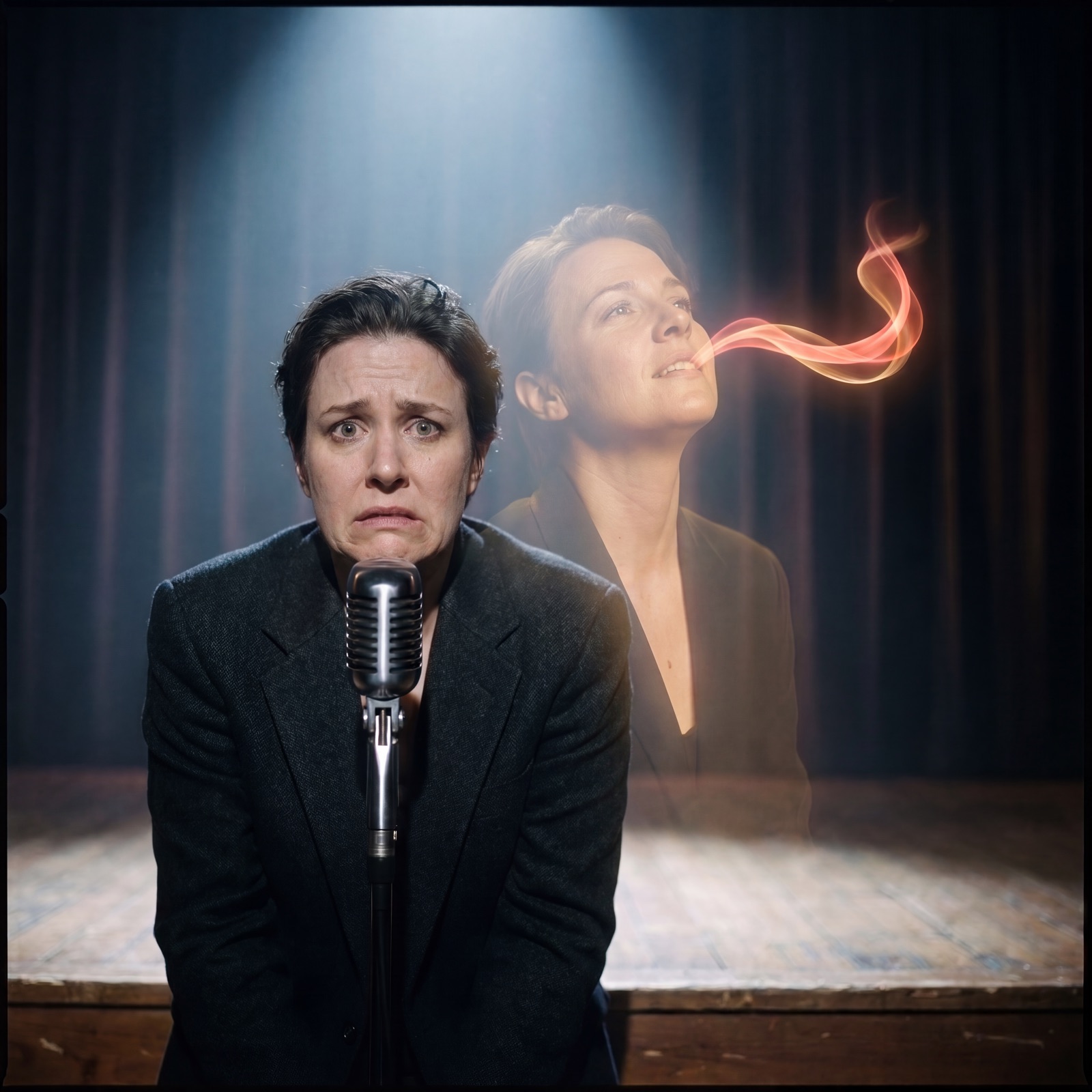
Shame is a strange thing to talk about in a singing lesson. It doesn't announce itself. Nobody walks in and says "I'm ashamed." What they say is that their voice feels stuck, or thin, or that they can nail a high note alone at home and lose it completely the moment someone's listening. That gap — between what a singer can do privately and what they can do while being watched — is where shame lives.
Shame works on the body the same way a threat does. The nervous system doesn't distinguish especially well between the fear of being judged and the fear of physical danger — both trigger the same defensive response. Shoulders rise. The chest tightens. The jaw sets. Breath, instead of dropping low and free, gets caught high and shallow. It's a reflex, wired in long before anyone ever handed them a piece of music — never a decision made in the moment.
This is the part I most want singers to hear: the body, doing exactly what bodies are built to do when they feel exposed, gets in its own way — not a failure of technique or preparation. A body braced like that cannot produce a free, resonant sound, no matter how much training is sitting underneath it.
Why Willpower Doesn't Fix It
Early in my own teaching, I used to think I could talk a student out of tension — explain the mechanics clearly enough, and the body would follow. It rarely worked that way. Tension held in the body sits below conscious control, which is exactly why instruction alone so often fails to move it. Addressing the body directly, before the voice, gives the nervous system somewhere to settle first.
This is why the first thing I work on with a singer is never the voice. It's safety. Before a single note, I'm paying attention to whether a student feels safe enough in that private setting to let their guard down at all. Everything else waits for that.
Safety Changes Everything
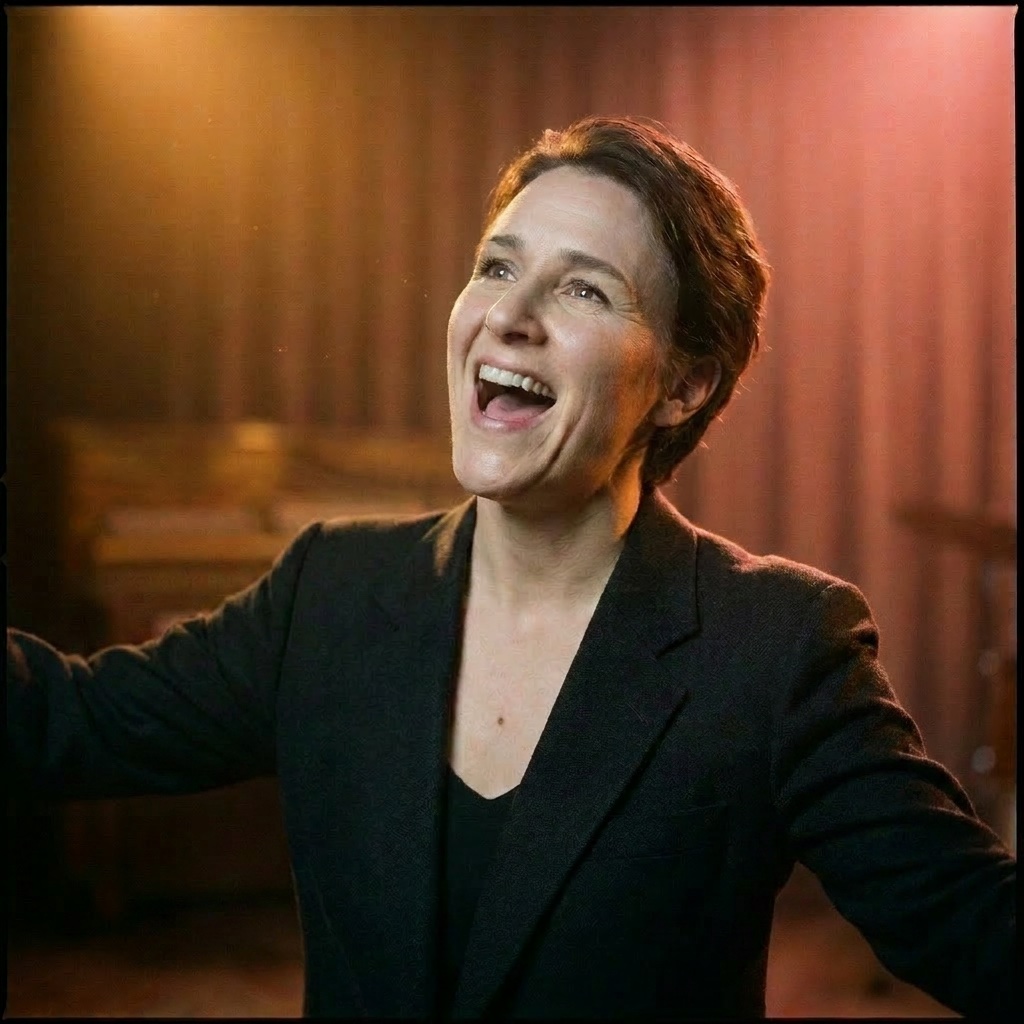
There's a state performers reach for — call it flow, call it being lost in the music — where self-consciousness quiets down and the singer simply sings, without the internal audience of judgment running in the background. That state can't be forced into existence. It arrives once the body no longer feels it needs to defend itself.
What I've watched happen, over and over, in thirty years of teaching, is this: the moment a singer actually believes they're safe — not told they're safe, but feels it in their body — the tension that was blocking the sound simply isn't there to fight anymore. The breath drops. The throat opens. And the voice that's been there all along starts to come out, often for the first time, exactly as it was meant to.
Uncovering, Not Building
Every singer who comes to me already has a voice — shaped by years of training, by whatever instinct first drew them to sing at all. My work is clearing away what's sitting on top of it: the bracing, the self-monitoring, the inherited belief that singing well requires proving something first. Give a singer real safety, and the voice underneath does the rest on its own.
This is the whole foundation of how I teach, and it's the idea I keep coming back to after three decades on stages and in studios: a voice doesn't need installing. It needs releasing.
Working Together
This thinking is at the centre of my private teaching practice in London, where I draw on everything from those thirty years — the Metropolitan Opera, places around Europe, the Americas, and Asia — not as a credential to prove myself at the door, but as the source of everything I now teach. If any of this resonates with where you are as a singer, I'd love to hear from you.
Safe to be fearless.